Your analytics show a healthy visitor count. Your inbox shows nothing — no enquiries, no calls, no sales. The natural conclusion is that you need more traffic, so you start eyeing ads. Resist that: buying more visitors for a site that doesn't convert the ones it has just pays to lose people faster.
The takeaway up front: traffic without leads is almost never a traffic problem — it's a conversion and measurement problem. Somewhere between landing and contacting you, visitors drop off, and you can't fix what you haven't measured. This guide shows you how to find where they leave and why, then the fixes that turn existing visitors into enquiries.
First, prove you have a conversion problem (not a traffic one)
Before changing anything, get one number: your conversion rate — the share of visitors who take the action you care about (submit a form, call, book, buy). If 1,000 people visit and 3 enquire, that's 0.3%. Until you know that number, you're guessing.
There's no single "good" rate — it depends on your industry, price point, and how ready-to-buy your traffic is — but the logic is simple. Healthy traffic with near-zero conversions points at your site, offer, or tracking, not your volume; a decent rate with too few leads is where more traffic genuinely helps. Most owners staring at an empty inbox are in the first bucket but assume the second — the misdiagnosis that sends good money into ads that were never the problem.
The hidden culprit: you might not be measuring leads at all
Here's the possibility to rule out first: you may be getting leads and not counting them. Plenty of "no conversion" sites are actually converting — the business just has no tracking to see it. Check these before assuming the worst:
- Is conversion tracking even set up? If analytics counts pageviews but nothing fires when someone submits a form or clicks your phone number, every lead is invisible — you'd see traffic and conclude nothing's happening.
- Do your forms actually deliver? Broken plugins, a wrong notification email, or submissions landing in spam are common and silently fatal. Submit a test enquiry end to end and confirm it reaches your inbox.
- Are people contacting you off-site? Plenty of buyers skip the form and just call, WhatsApp, or email the address they saw. Those are real conversions your website caused, but no form-based metric will show them.
Fixing measurement isn't busywork — it's the foundation. Every decision after this depends on numbers you can trust; right now you may be flying blind.
Walk the path a visitor takes and find the drop-off
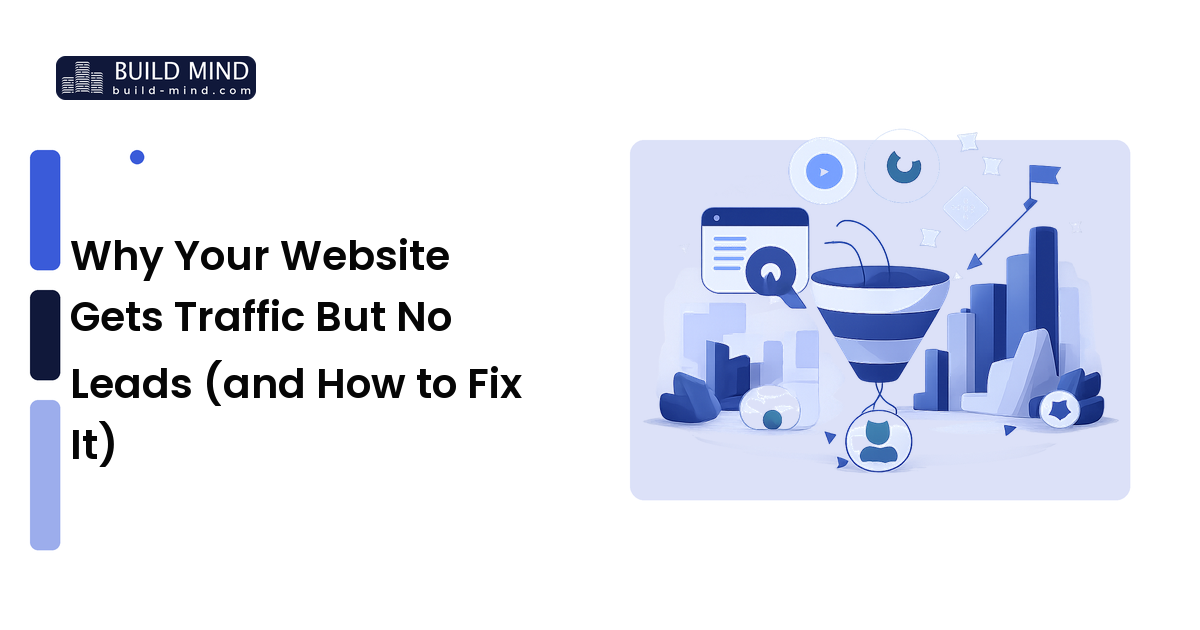
Once you trust your tracking, stop treating "the website" as one thing and break it into the steps a visitor takes to become a lead. Conversion is a chain that breaks at one link — find it, don't redesign everything. A typical path:
- Land on a page (usually the homepage or a search/ad landing page).
- Understand what you offer and whether it's for them.
- Trust you enough to act.
- Find the next step — form, call button, or booking link.
- Complete it without friction.
Use your analytics to see where people fall out of this chain. High traffic to a page with almost no clicks onward means the breakdown is at understand or trust; people who reach your contact page but don't submit are stuck at complete; a high bounce on the landing page itself usually signals a mismatch between what they clicked and what they got. Find the single biggest leak first — fixing the step where the most people drop off returns far more than polishing steps that already work.
The usual reasons visitors don't convert — and the fix for each
Most leaks trace back to a short list of causes. Match your symptom to its fix:
- Your value isn't clear fast. If a visitor can't tell what you do, who it's for, and what to do next within seconds, they leave. The fix is copy, not decoration: a plain headline stating your offer and its benefit, in your customer's words, above the fold.
- There's no obvious next step. Interest with nowhere to act dies quietly. Every important page needs one clear primary action — "Get a quote," "Book a call," "Shop now" — styled to stand out, not buried in the footer.
- No reason to trust you. People don't hand over details to a business they're unsure about. With no reviews, testimonials, or real photos, visitors hesitate at the moment you need them to act. Put genuine social proof near your CTAs.
- The form is doing the damage. Long forms, fields people aren't ready to share (budget, company size), or one that errors on mobile all bleed leads. Cut every field you don't truly need — dropping to name and contact method often lifts submissions.
- A mismatch between the click and the page (the bounce signal above). Send focused traffic to a focused page about exactly what was promised, not a generic homepage. For the page-by-page structure, see the web design guide.
- It's slow or broken on a phone. Most visitors are on phones. Open your site on yours and try your main action; if it's clumsy for you — slow images, tiny tap targets, a form that won't submit — it's costing you customers who never said a word.
Fix one thing, measure, then move on
The discipline that separates real improvement from random tinkering is changing one thing at a time and watching the number. Redesign the headline, shorten the form, and add testimonials all at once, and even if conversions rise you won't know which change did it — so you can't repeat the win.
Start at your biggest leak, make one focused change, and give it enough visitors to produce a readable result — a handful of sessions tells you nothing. Keep the change if it helped, revert if it didn't, then move to the next leak. Conversion improvement is a steady loop, not a one-time overhaul, and that loop is what compounds.
Once your site converts at a healthy rate and you track every lead, thin lead volume genuinely is a top-of-funnel problem worth solving with more traffic. But fix conversion first — it multiplies traffic rather than adds to it, so doubling your rate makes every visitor, now and later, worth twice as much. Pouring traffic into a leaky funnel is the most expensive way to grow.
FAQ
Why is my website getting traffic but no leads or sales?
Almost always because visitors drop off between landing and contacting you — or because you're getting leads you aren't tracking. Confirm your tracking and forms work, find the biggest drop-off in the visitor's path, and fix that step. It's a conversion and measurement problem far more often than a traffic-volume one.
What is a good website conversion rate for a small business?
There's no universal number — it varies with your industry, price point, and how ready-to-buy your traffic is. Your own trend beats any benchmark: measure your current rate, fix the biggest leak, and watch it climb. A near-zero rate on healthy traffic points to your site or offer, not your visitor count.
How do I know if it's a traffic problem or a conversion problem?
Compare your conversion rate to your lead volume. Healthy traffic with near-zero conversions is a conversion problem; a decent rate with too few leads in absolute terms is where more traffic actually helps. Most owners with empty inboxes are in the first group but assume the second.
How can I track leads if people call or message instead of filling a form?
Account for off-site conversions deliberately: use a tracked or click-to-call phone number, and ask new enquirers how they found you. Otherwise real conversions your website caused stay invisible, and you'll wrongly conclude it isn't working.
Next step
Don't buy a single extra visitor until you know your real conversion rate and the one step where most people drop off. Confirm your tracking and forms work, fix your biggest leak first, and measure one change at a time.
Want a second pair of eyes on where your site is leaking customers? Talk to the team at Build Mind — we help small businesses turn the traffic they already have into enquiries and sales.